|
cyberbarf VOLUME 25 No 3 EXAMINE THE NET WAY OF LIFE OCTOBER, 2026
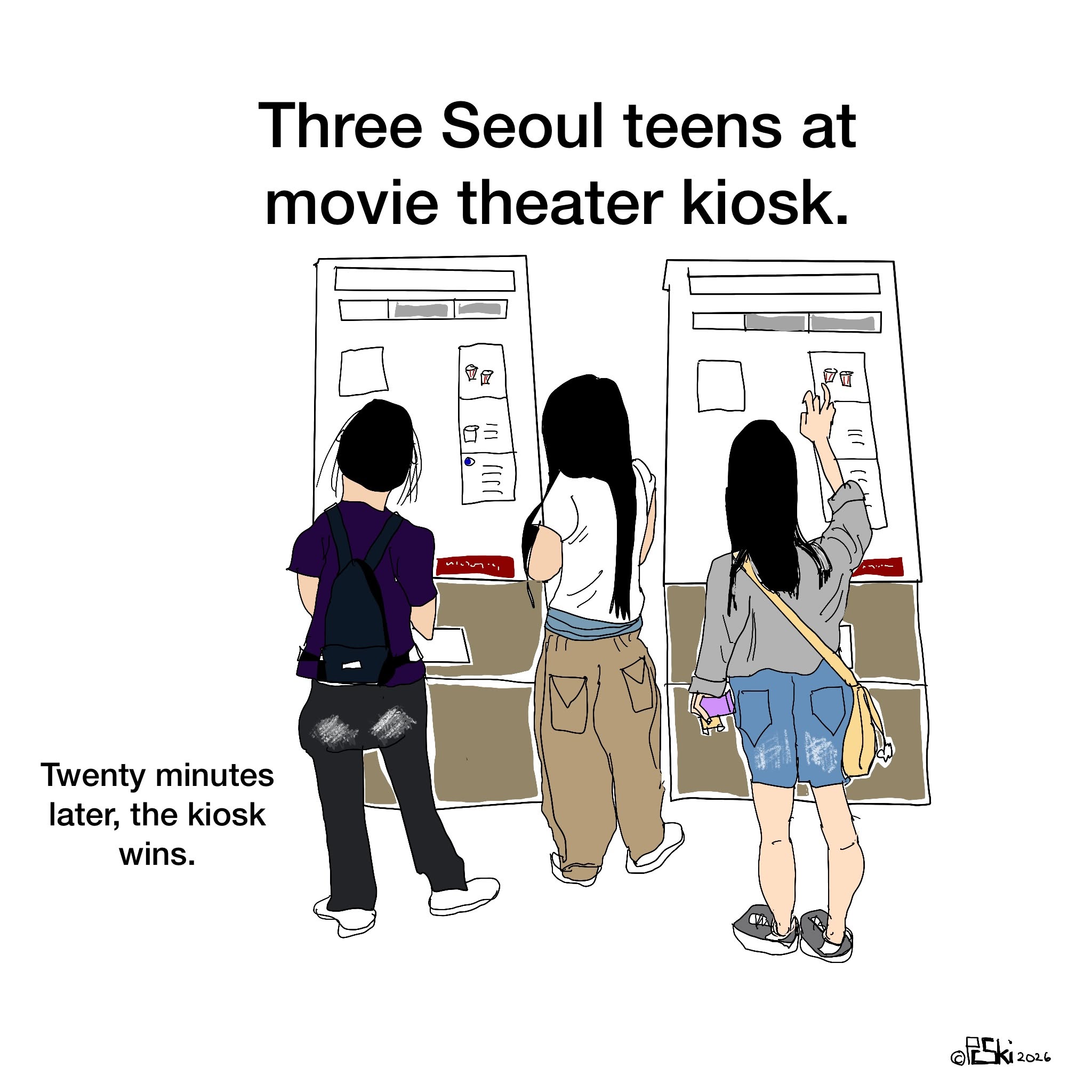
Cartoon Drawn on Recent Trip to South Korea ©Ski/2026 cyberbarf OCTOBER, 2026 PFTTT... NETFLUX iTOONS ACTOR INFERIORITY (AI) FOUND BUT NOT LOST ON THE INTERNET QUICK BYTES WHETHER REPORT
©2026 Ski Words, Cartoons & Illustrations All Rights Reserved Worldwide Distributed by pindermedia.com, inc
cyberculture, commentary, cartoons, essays
|
|
cyberbarf PFTTT... CYBERCULTURE Bill James could be considered the pioneer in putting statistical formulas into the fan mainstream with his self-published Baseball Abstracts in the late 1970s and 1980s. HE inadvertently provided the statistical framework that birthed modern fantasy baseball. The simple way to measure a pitcher's control (walks plus hits per inning or WHIP) gave fans insight layer into how to evaluate players much like professional scouts. It also helped launch the cottage industry of non-professional but fanatical people breaking down game films in other sports such as college football (and the draft predictions) to pro football (analytical grading of player game performance.) Pro Football Focus (PFF) was the gold standard in third party football grades. Its staff would look and grade every football player's plays and assign a measurement (minus 2 to plus 2) to calculate an overall score and ranking. It was similar to the actual team's own scouting department breaking down game tape to determine what mistakes were made and tendencies that other teams could exploit in the future. Sports scouting is the evaluation of player talent that incorporates physical, mental, statistics and gut experience but with the rise of technology numbers appear to be more important than human experience. When Chris Collinsworth purchased PFF in 2014, it gave the company some more credibility because Collinsworth is a former NFL QB and long time football analyst. When PFF was sold to Teamworks, an AI company, in March, 2026, its credibility took a major hit. After its first week of performance grades, there were backlash in Chicago, where the offense put up a record 59 opening day points under Caleb Williams, but he was only ranked 19th best QB for the week. It was learned that after the acquisition, several top human employees were let go. It seems that venture capitalist purchased the brand to strip down the human knowledge and its expense to let its AI program do the grades without interpreting the full scope of the 10 other players and/or defensive presence to determine what actually happened on a play. It is especially important when looking at QB play, as many former QBs with YouTube channels explain that QBs get the blame for bad plays even though the real mistake could have been a WR mistake in route running or a player missing a block. The Caleb Williams ranking rankled many in Chicago media to the point of calling out PFF new structure as akin to AI slop. But numbers rule sports. Pregame shows are riddled with betting odds and prop bets. In game broadcasters rely upon statistics to explain or predict the next play. Kids do not go to the ballpark with a pencil to manually kept a box score. Instead, it is a tablet or phone running spreadsheets. Maybe there will be revolution against the flood of stat formulas to a point where the average fan will just sit back and watch the game unfold in front of their eyes.
cyberbarf NETFLUX TRENDS Netflix stock was down 11% in September and down 23% for the year. Investors are worried about Netflix's future after its failed attempt to take over Warner Brothers. Several factors are cited for the decline: First, there is a declining reception in Netflix's original content. Netflix poured billions of dollars in new, original (IP it owns) content, including in South Korea, but this year engagement levels were well below expectations. Most of the new offerings are short series, usually divided into two seasons which upsets viewers who are trapped waiting months for a conclusion to their show. And once the first run is complete, there is very little interest in re-watching it. Second, YouTube has been rapidly expanding its living room viewers, having captured a record 14.2% share of US TV time while Netflix's share as dropped to a multi-year low of 7.8% share. Also, YouTube is tightening its grip on top creators by offering direct financing, greater payouts, and priority marketing in exchange for exclusivity. YouTube does not pay for channel creators production costs for videos. Netflix is the money source for its original content. YouTube has a huge competitive advantage in this area. Netflix's plan to create its own creator-content library (like podcasts and vlogs by paying people to be on Netflix platforms) would mirror YouTube's model, but it would be costly and weaken its current show film and show catalogues. Third, streamer inflation, the double digit rise in monthly subscription fees, are causing people to cancel subscriptions to move toward free content like YouTube provides on its base platform. Here, Netflix is trying to re-invent itself. The bid for Warner Brothers was to acquire WB's vast film and television libraries. By owning a massive amount of entertainment titles, Netflix could become the Blockbuster of the streaming world. The most watched TV shows on streamers have been reruns of popular US sit-coms. The other prong in the strategy is to bid to show live sporting events, which is the last shining advertising hope at the networks and cable television. But even Congress is upset that streamers are forcing people to get a subscription to watch one game, including one's own local team. During the last Hollywood strike, Netflix pushed billions into foreign markets to produce content. A major beneficiary was Netflix Korea. How will the network pivot may play in Netflix Korea? Netflix's multi-billion commitment to produce k-dramas and variety shows comes to an end this year. Netflix's big money push was a major force in weakening the local SK entertainment studios with higher costs, more risk and less local investor money. If Netflix pulls out of Korea or substantially reduces spending, the SK industry is not in a position to ramp up production under its old system with the lingering Netflix “big budget” hangover that top Korean stars, actors and directors still want to get their big American paychecks. By early 2027, we will learn whether SK will have a huge entertainment sink hole crisis if Netflix scales back. We will also learn if Netflix and its streamer cousins are going to fall into the same snare as traditional cable ran into: too high monthly fees, subscribers not wanting to pay for premium channels like sports that they do not watch, and cord cutting to find cheaper entertainment alternatives.
iToons
cyberbarf ACTOR INFERIORITY (AI) FUTURE Former EVERGLOW member Wang Yiren is reportedly a part of a recent Chinese “live-action” short drama adaptation of The Left Ear novel. In itself that seems like a major coup for the singer but the catch is that it's an AI film and she is not doing any on-set acting of her own. Rather, she is simply licensing her likeness to the studio, or at least her agency, Yuehua Entertainment, is. Perhaps making things even worse is the fact that the project has resorted to licensing images due to a lack of interest from real actors. The producer remarked “The creators also want to use it to obtain image authorization from more well-known actors. Getting actors to agree to this is a problem faced by the entire industry.” The producer of the AI adaptation seems to even understand why famous actors are unlikely to give up their IP, should have been a red flag to Yuehua that they apparently did not heed. An actor's likeness, image and voice are only part of their valuable services. They create the embodiment of a character, bringing to life the script's words into action: mannerisms, speech, emotions, feelings, interaction with others, to create an entire performance. An actor's value is measured by how well he or she can immerse the audience in the story. No actor in their right mind would give a studio permission to do anything with their image, voice since the actor has no control of what the AI “performance” would be and it would materially affects the actor's reputation. Additionally, it is not as if it is just the actors who are hesitant to participate. The audience themselves have not responded well to the AI push. Public aversion to AI faces is concentrated at both ends. Some people felt that AI faces were all the same and particularly distracting; others feared that AI faces were too realistic, creating an “uncanny valley effect” where even seeing something does not necessarily mean it is real. In China, in the first quarter of 2026, the industry released approximately 128,000 micro-short dramas, of which around 122,000 were AI-generated, accounting for over 95 per cent of this show format. However, taking the 2026 Spring Festival season as an example, the number of live-action dramas released was only one-fiftieth that of AI-generated dramas,but their total viewership reached 25 times that of AI-generated dramas. AI is still being pushed in Asia as the new frontier: a faster, cheaper way to make entertainment content, but the public and professional actors are clearly not fully on board.
cyberbarf FOUND BUT NOT LOST ON THE INTERNET
There was a photograph of a large stack of British police cars awaiting for the Crusher. Apparently the cop cars were damaged in the line of duty. The decision to scrap so many cars leads to a question: why? High inspection and vehicle registration standards destroys the used car market in the UK. One would think that someone could salvage spare parts but the bulk of the sheet metal is going to be flattened into recycled cubes. Source: Daily Mail (UK)t
Speaking of cubes, an experimental robo-toilet is on scene in New York City. It is a pay-to-pew box. A user gets 10 minutes to do their dew before time runs out and the door opens for the world to see your Shame on the Thrones glory. Are public restrooms such a thing of the past that they need to bring outhouses back on public sidewalks? Is it connected to the sewer or is it an expensive portal john? Smell you later, NYC. Source: neatorama
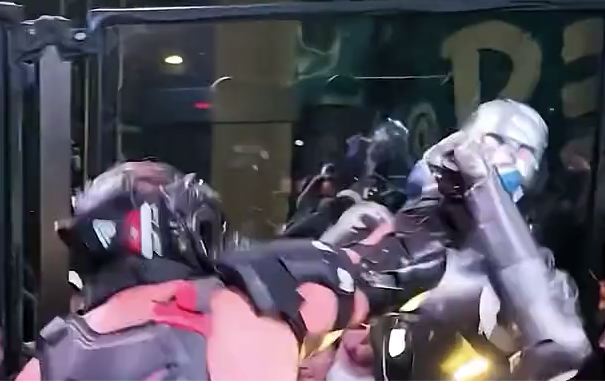
It had to happen someday. A human being wants to fight a robot. A real boxing match. Real blows. Even when the human is padded to the hilt, he got pummeled by the iron machine. The robot promoter wants to arrange more matches but who really cares. Boxing as a professional sport lost its heyday more than 40 years ago. Source: NY Post
cyberbarf QUICK BYTES CYBERCULTURE SPONSORED POSTS: Ghosts are sponsoring IG posts? Because as a creator, I do not boost or partner with brands to promote my art. But recently, when I post on IG it is a normal screen shot. But after an hour or more, a re-check finds a “sponsored” label on it. I recheck the settings to confirm I have no ad or brand authorization. I have not set up the account to pay for boosted content. Research on the subject is rather dumbfounding; the weak consensus is that it is just an IG glitch or IG itself is promoting you to a wider audience. I do not think social media platforms are so generous, but it did lead to a small uptick in non-follower views. I think it must be to get me trained to want sponsored post fees from me. http://instagram.com/pindermedia.ski BIG LIPS SINK SHOW: A Korean actress got some criticism for lip injections for her last TV series SCANDAL. Korean social media is the epicenter of cancel culture and criticism. Lip filler for a period piece seems a little much, but actors make image decisions all the time when they accept roles from costumes to hair styles to weight. But internet critics will find anything to gripe about. The actress apologized for her appearance while the director supported her choice. MERGER NOTHING BURGER: The US states anti-trust settlement with Paramount-WB left nothing for the businesses and people most effected by the merger. “Small business owners and independent contractors like those that populate the independent and documentary industries, the very groups that would stand to potentially gain from greater production and distribution in competitive markets, get nothing,” said free speech and media groups in their opposition to the settlement. The idea of independent boards to run news organizations is hardly enforceable if Paramount appoints the boards. The idea of producing 30 films/year in California also seems unenforceable meddling. Less competition in Hollywood means less chances to get hired if you are an actor, writer, director or film crew member. CARTOON SLOP: Baltimore Sun fires its award winning editorial cartoonist, KAL. Within a year, its editors are using ChatGPT to make their own “editorial” cartoons. Putting word prompts into an AI image generator is not even remotely close to an artist digesting today's news, using cultural references, symbols to create a unique social commentary on a public issue. The cartoon slop is more propaganda than commentary. It is devoid of the elements a real human cartoonist connects to actual human behavior and shared human experiences. Of course, artists and illustrators are outraged that readers are being given slop.
|
|
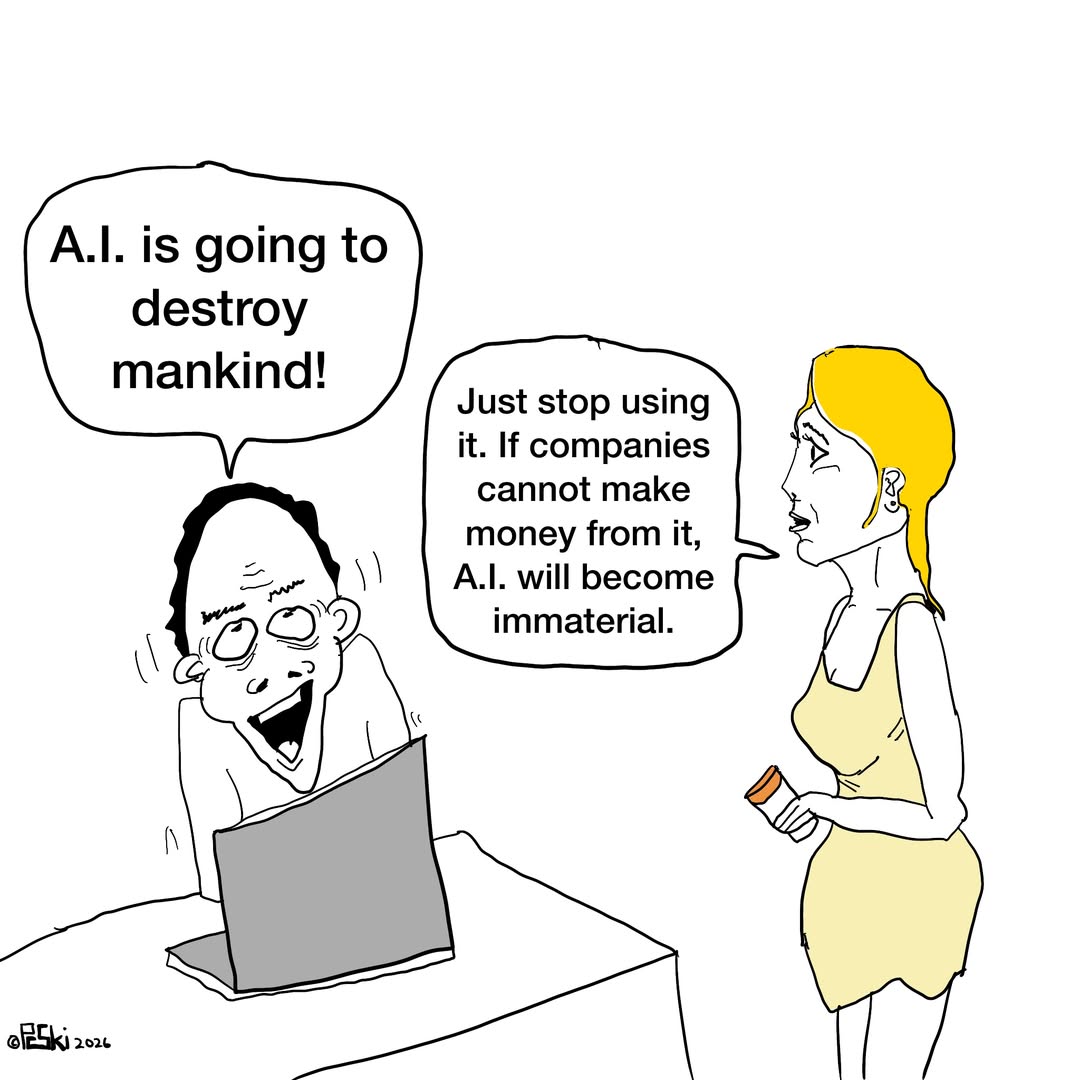
THE DAILY SCARE IS LOOKING IN THE MIRROR. |



|
|
 |
 |

|
cyberbarf THE WHETHER REPORT |
cyberbarf STATUS |
|
Question: Whether many Republicans abandoning Trump during the midterm campaigns is a little too late for GOP succession November? |
* Educated Guess * Possible * Probable * Beyond a Reasonable Doubt * Doubtful * Vapor Dream |
|
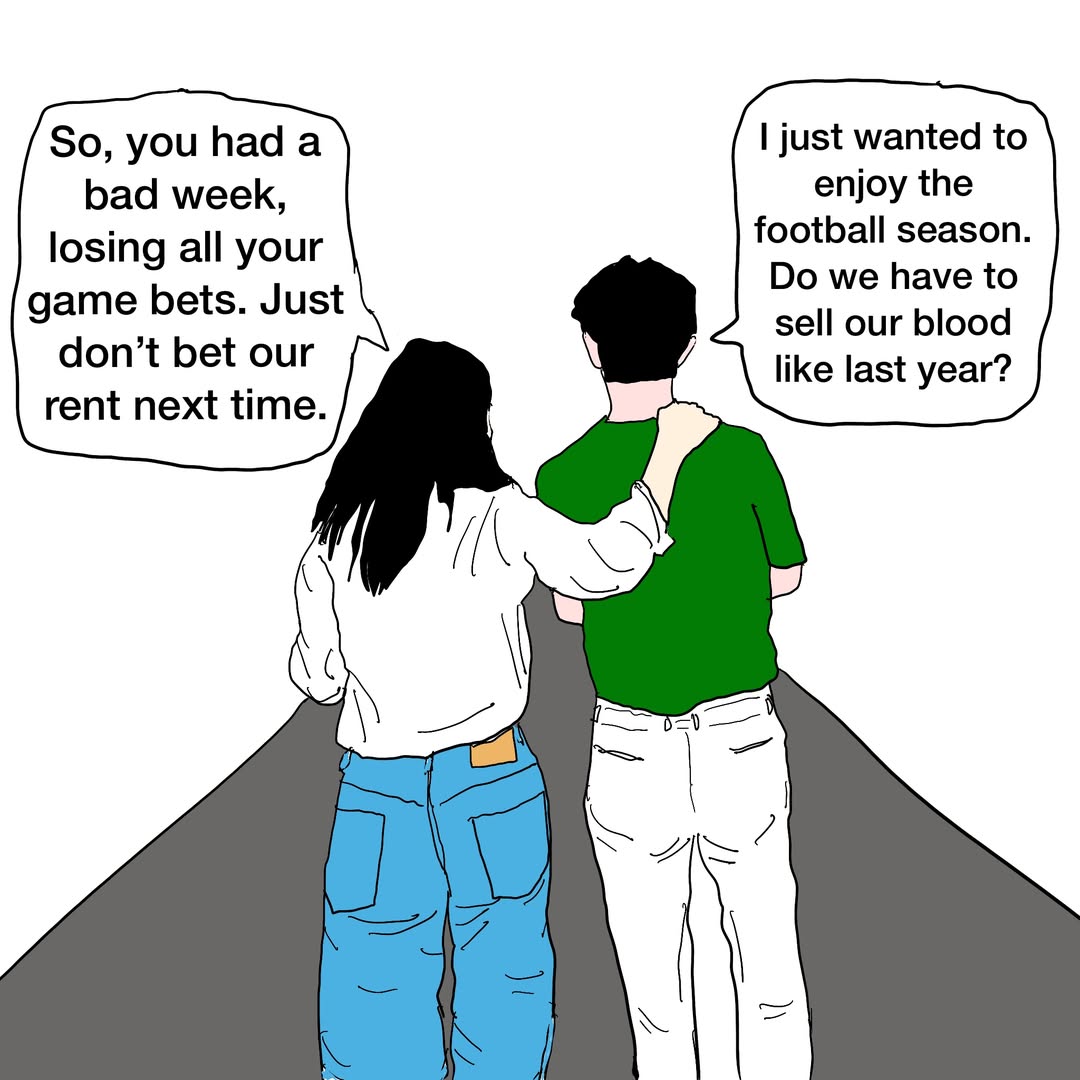
Question: Whether sports leagues and gambling site partnerships are leading to integrity issues? |
* Educated Guess * Possible * Probable * Beyond a Reasonable Doubt * Doubtful * Vapor Dream |
|
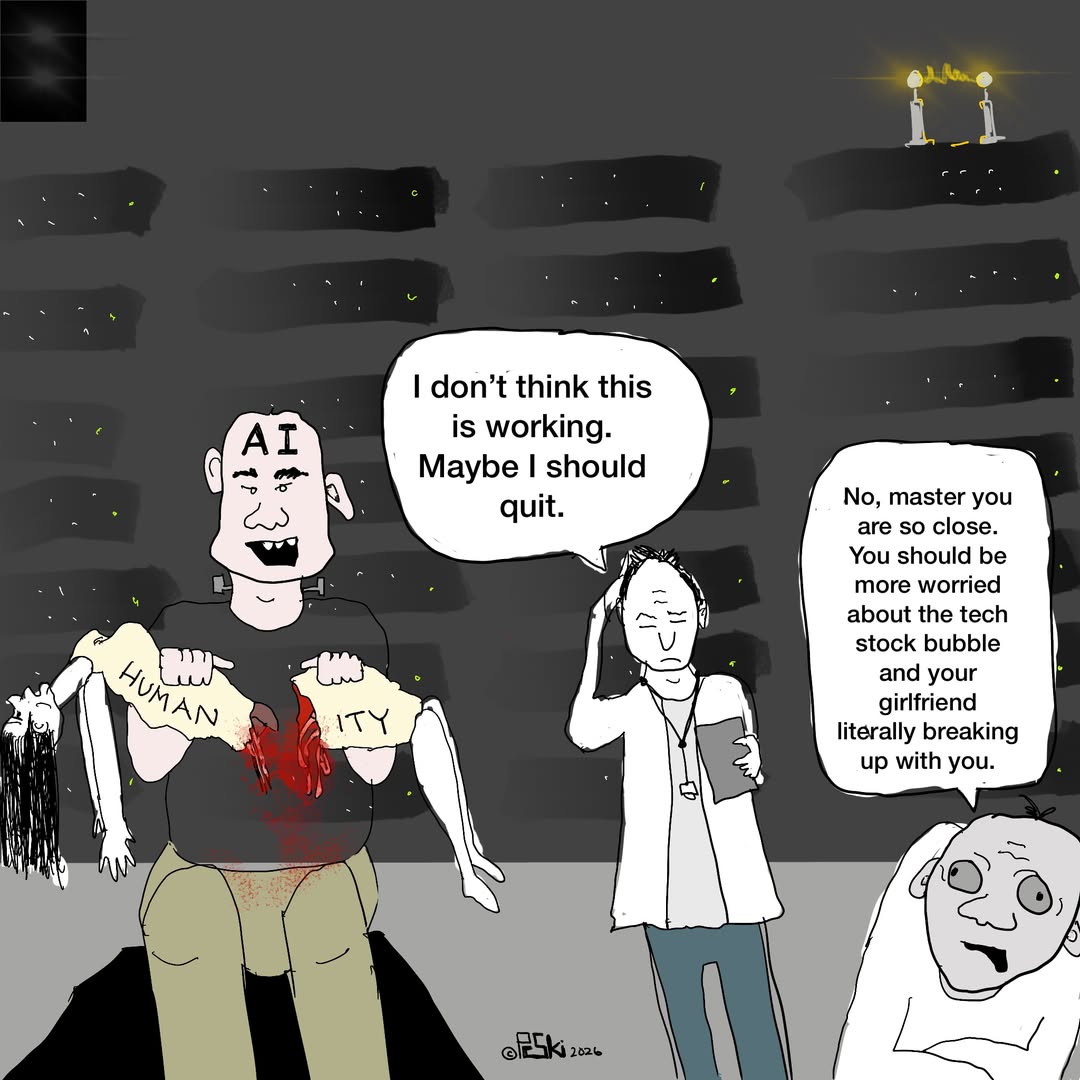
Question: Whether reports of rogue AI agents is a media play to keep AI stock prices from diving? |
* Educated Guess * Possible * Probable * Beyond a Reasonable Doubt * Doubtful * Vapor Dream |
|
OUR STORE IS STILL UNDER RE-CONSTRUCTION. THE WAIT IS ALMOST OVER. APOLOGIES.
|


 |
cyberbarf
Distribution ©2001-2026 SKI/pindermedia.com, inc.
All Ski graphics, designs, cartoons and images copyrighted.
All Rights Reserved Worldwide.